Jeanine Richards: Physical Chemistry
Current exhibition
-
Overview
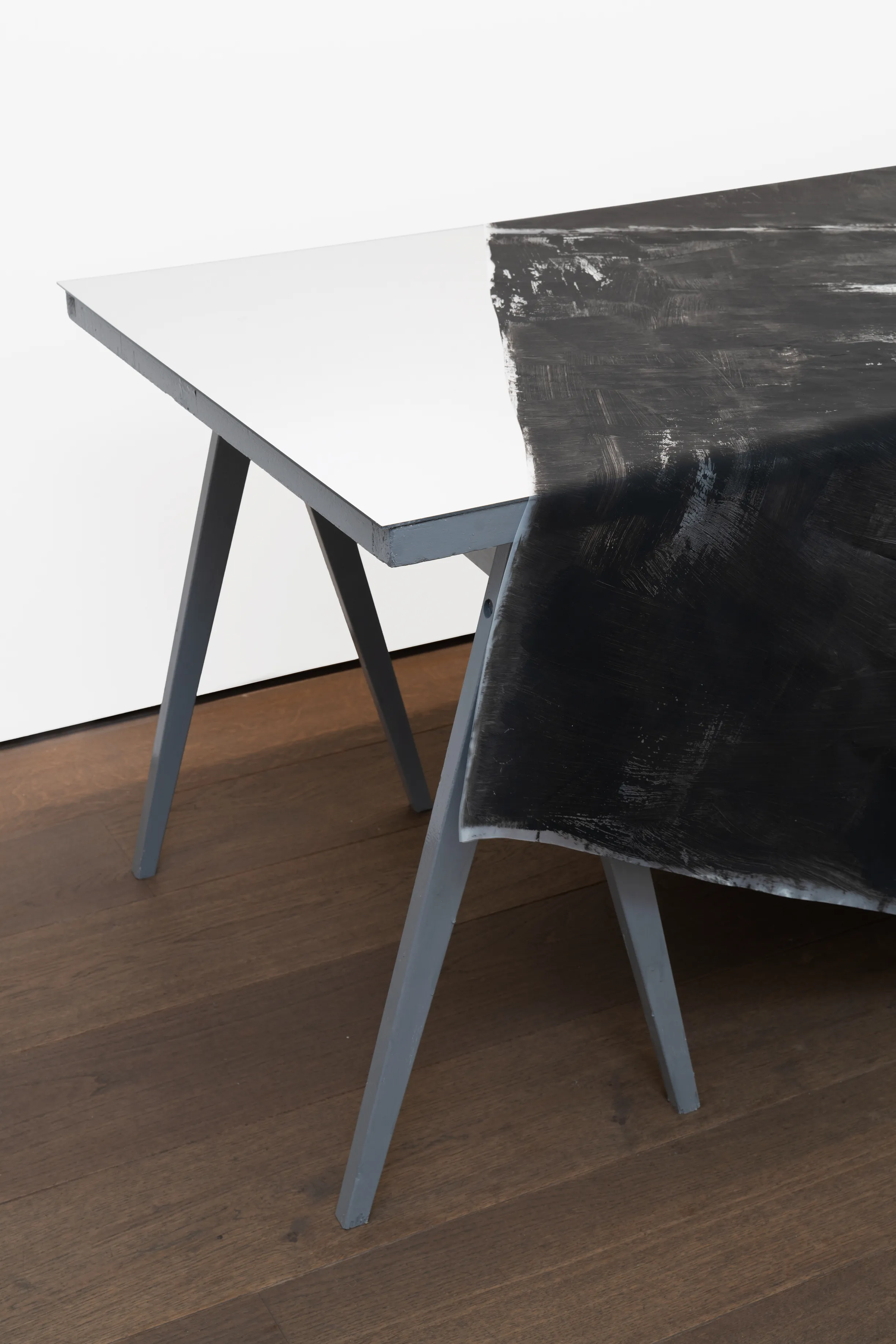
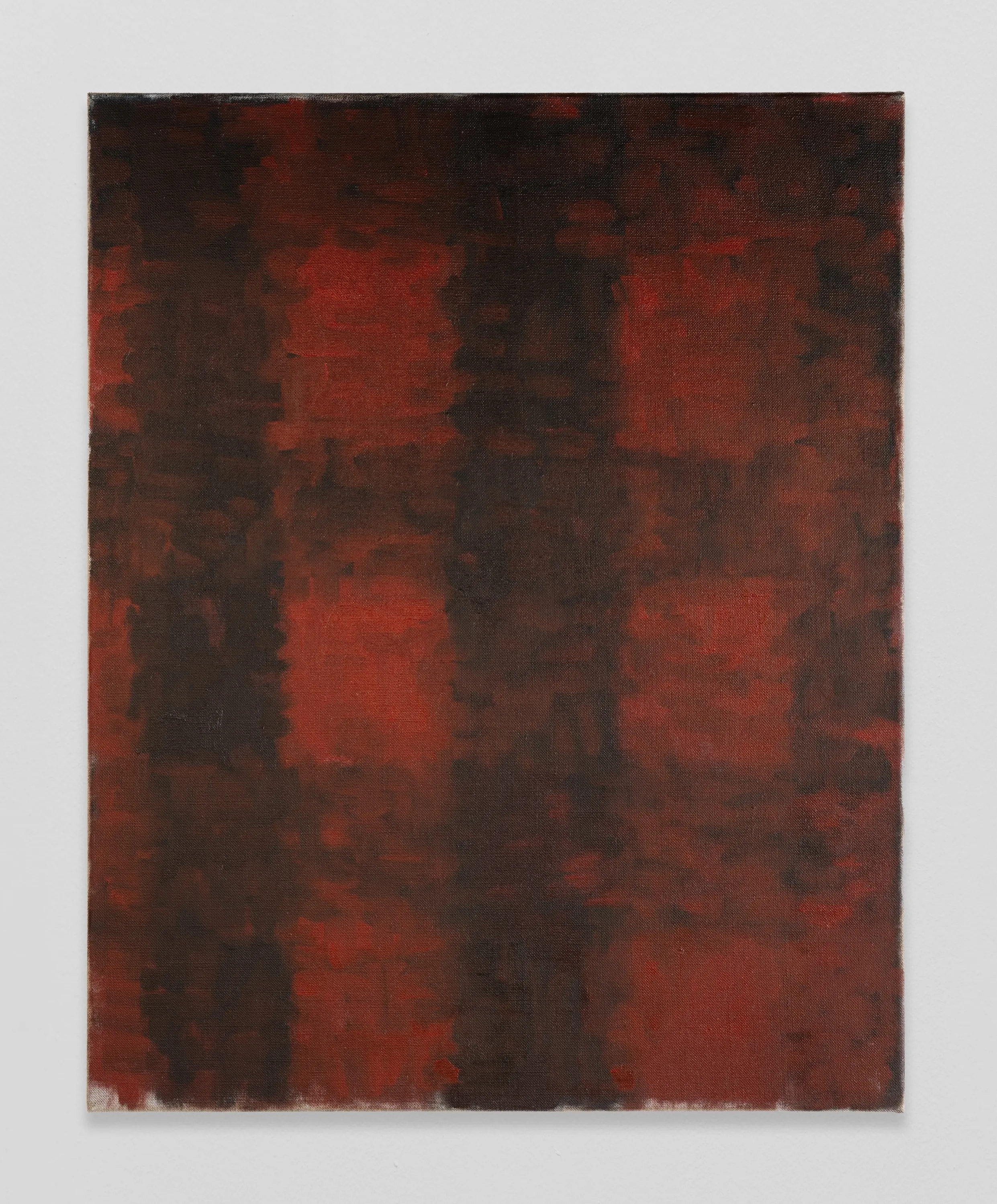
 Alma Pearl is delighted to present Physical Chemistry, Jeanine Richards’ first solo exhibition with the gallery. Featuring a group of new sculptures, paintings and installations, this multilayered presentation expands on the artist’s ongoing relationship between material reality and an expanded performative fiction. Richards blends conceptual concerns and material properties, socially constructed gendered codes, everyday functional objects and art historical references. The exhibition navigates between structural logic and physical experience, confronting prevailing visual conventions while subtly revisiting inherited art historical positions.Borrowing its title from the scientific field that studies molecular interactions and reactions, Physical Chemistry plays on a dual meaning upon which the exhibition unfolds. While the phrase might initially evoke sexual attraction, it also points to the behaviour of matter at the molecular scale—how substances respond to stimuli, interact with one another, and exist in constant states of transformation and flux. Works are connected across the presentation through a network of formal and conceptual cross-references, functioning not only as isolated objects but as interdependent elements within a calibrated installation.In INTENTION (2026), Richards draws from Apollo and Daphne (1470–80) by Antonio del Pollaiuolo, in which the nymph transforms into a laurel tree to evade Apollo’s pursuit. Richards repositions this metamorphosis as an assertion of agency rather than an act of escape. The painting stages transformation as material reaction — a decision to alter form rather than be captured. Through irony and subtle metafictional inflection, the work unsettles the historical association of woman with nature and man with culture. Feminist readings emerge structurally, embedded in orientation, surface and material assertion rather than overt depiction.Throughout the exhibition, the body is rarely represented directly yet consistently implied. Tables become subtly anthropomorphic; calibrated proportions and pointed legs suggest posture and relation. Objects perform themselves. Humour operates as both a structural and metaphysical device, allowing the works to possess personality without collapsing into narrative illustration.Private Dining (2026) draws from Henri de Toulouse-Lautrec’s In a Private Dining Room (At the Rat Mort) (c. 1899). In this new work, the bow is re-created against a silver and green background, recalling the atmospheric, slinking green glow of a nocturnal tête-à-tête supper.In works such as New narrative (red and maroon) (2026), patterns drawn from American folk vernacular — including Buffalo plaid and the red-and-black checkerboard found in the United States and linked to Scottish tartan — carry biographical resonance, reflecting the artist’s American parentage and Scottish upbringing. Yet these biographical references intertwine with Richards’ engagement with art historical positions. For example, in Small procedure (2026), the artist generates patterns through the repetition of the painted curvaceous line, setting this approach against the modular rigour of the straight line as expressed in Minimalist and Conceptual manifestations. The subtle inflection of humour contained here in Richards’ title sets a recurrent tone.References to functional objects run throughout the presentation with the repositioning of dust sheets, tables, plastic and lighting. The two light sculptures — Minimal Aura (pale yellow) and Minimal Aura (white and pink), both 2026 — introduce another layer of functionality, while also establishing the emotional cue of the atmosphere within the narration at play.The representations of tables operate within this same register; from Gerhard Richter’s famous work Tisch (Table) 1962 to Daniel Spoerri’s assemblage in Kichka's Breakfast I (1960) or Joseph Kosuth’s One and Three Tables - the table operates at the intersection between work of art, functional object and site for political and ideological discourse. In Richards’ work, the tables made as three distinct works are arranged here in conversation. Materialising in the form of object, or as image – whether it’s sewn or painted — while functioning simultaneously as stage setting and as actor within an unfolding but unspecified narrative. They are not merely props, but agents that activate the space.Physical Chemistry (2026)—a table topped with a painted plastic sheet, held in place by a stone on the ground—exemplifies this interplay. Its tapered legs introduce a subtle anthropomorphic quality, suggesting stance and orientation, while the painted plastic surface destabilises the picture plane, collapsing the distinction between vertical and horizontal axes. Horizontality is thus reconfigured as both structural and provisional, charged with the potential for the painted surface to slip onto the floor. The table also gestures toward gathering, returning the form to the social and personal sphere, or even—perhaps—to a kind of deconstructed portrait carrying biographical resonance.The large textile and wooden sculpture Kiss of a Spider Woman (2026) borrows its title from the 1976 novel by Manuel Puig in which a love story set in Argentinian prison blends politics, fantasy and metafiction through the structure of conversation. As elsewhere in the exhibition, reference operates as a form of recombination rather than quotation.
Jeanine Richards (b. 1968, Cambridge, UK) is an artist based in London. Her multidisciplinary practice is structured around an investigation of painting as both image and object, while also encompassing works on paper, sculpture, textiles, and installation. Since 1998, she has worked collaboratively as part of the artist duo Cullinan Richards, exhibiting in notable institutional venues including Sharjah Art Foundation (2003); South London Gallery, London (2003); Whitechapel Gallery, London (2004); Hayward Gallery, London (2010); Tramway, Glasgow (2010), and Cooper Gallery, Dundee (2016-17) among others. Recent exhibitions include Back to School, Chequers London (curated by Cecile Tulkens and Anna Howard) (2025) and SupaStore Yes!, 12 Hammersmith Grove / HS Projects, London (2025), a project by Sarah Staton. Jeanine Richards has lectured across art schools in the UK and abroad, and from 2004 to 2019 she was Associate Professor at Kingston School of Art. In 1992 she was awarded the Abbey Major scholarship at the British School in Rome and in 2012 was amongst the selectors of New Contemporaries. -
Installation view:Jeanine Richards: Physical Chemistry, Alma Pearl, London (2026)
-
Reenactment, 2026Oil paint on linen165 x 125 cm
65 x 49 in -
Installation viewJeanine Richards: Physical Chemistry, Alma Pearl, London (2026)
-
Installation view:Jeanine Richards: Physical Chemistry, Alma Pearl, London (2026)
-
Jeanine RichardsBlue Painting Table, 2026Oil paint on linen165 x 125 cm
65 x 49 in -
Jeanine RichardsPhysical Chemistry, 2026wood, gloss paint, plastic, mirror, torridonian sandstone199 x 125 x 73 cm
78 1/2 x 49 x 28 1/2 in -
Jeanine RichardsPrivate Dining, 2026Oil paint and pigment on linen60 x 51 cm
23 1/2 x 20 in -
-
-
Installation view:Jeanine Richards: Physical Chemistry, Alma Pearl, London (2026)
-
Jeanine RichardsNew Narrative (red and maroon), 2026Oil paint on linen75 x 60 cm
-
Jeanine RichardsINTENTION, 2026Oil paint and pigment on linen75 x 60 cm
29 1/2 x 23 1/2 in